游戏变革者:Secret of Mana——让我撑到 32-Bit 革命到来的 SNES 经典
Game Changer: Secret of Mana - the SNES Classic That Tided Me Over Until the 32-Bit Revolution Arrived
Secret of Mana 是 1995 年初作者买不起 PlayStation 时撑到 32-Bit 革命的 SNES 经典动作 RPG。该游戏 1993 年发售于日本,1993 年 10 月登陆北美,1994 年 11 月登陆欧洲;现可通过 Collection of Mana 体验英文版及前作。
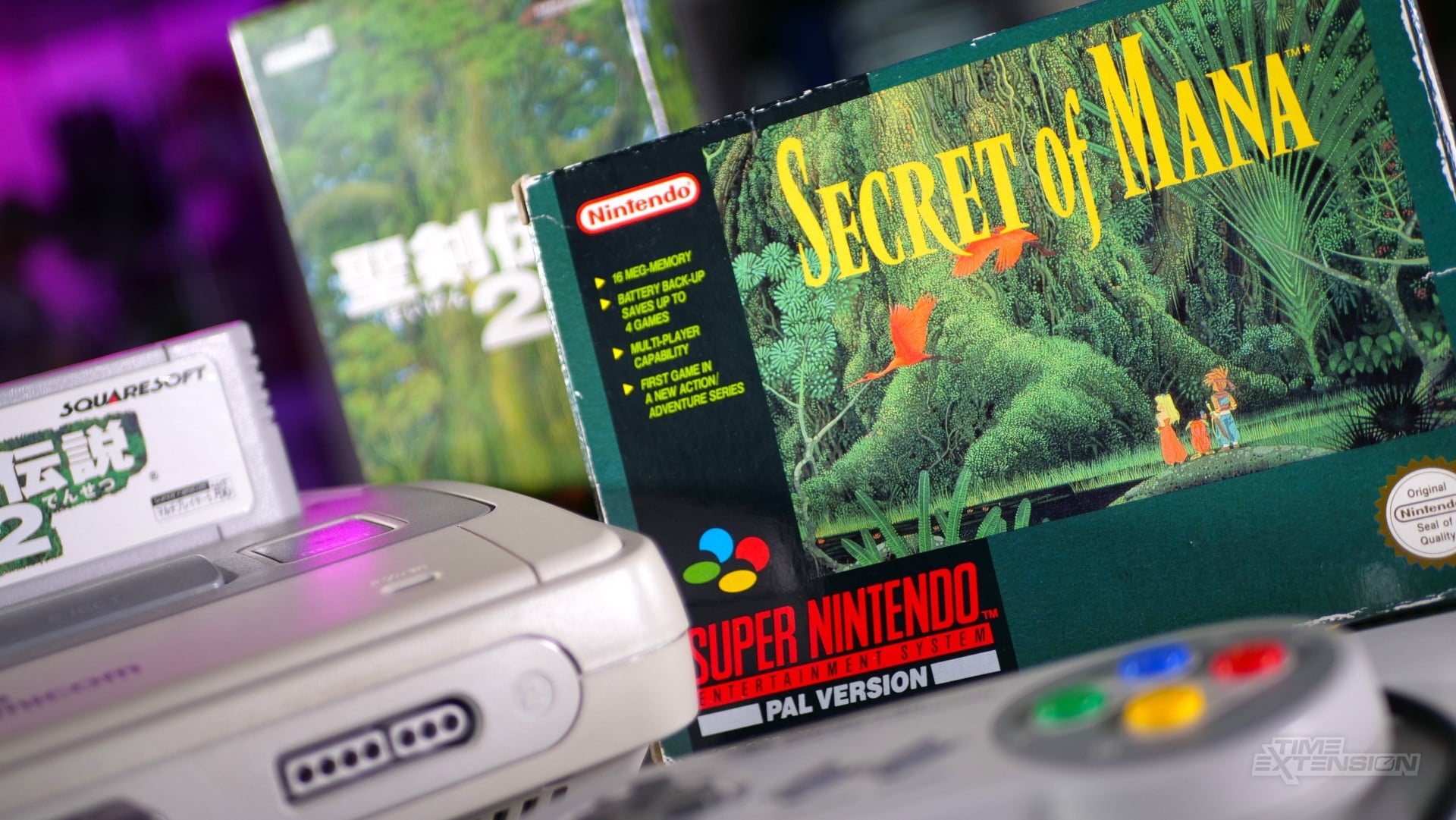
Secret of Mana (or Seiken Densetsu 2, if you prefer) is one of those games that, when I think back to my first time playing it, felt like it arrived at a pivotal moment in my gaming history.
That is because the day in early 1995 I bought a copy (pre-owned from a market stall in the English town of Northampton) was the exact same day I saw Ridge Racer running on the PlayStation for the first time. An independent gaming store sat right next to Northampton's open-air market (one of the largest in the country, which can trace its history all the way back to 1235, if you're interested) and was demonstrating an imported Japanese console from its window.
The impact of seeing those smooth-rendered 3D visuals had a galvanising effect on me. I wouldn't necessarily say I had grown tired of the 2D graphics on the Mega Drive and SNES by this point; I'd had the former for five years and the latter for around three, so they weren't really 'old news'. However, seeing the promise of 3D demonstrated so vividly got me almost unreasonably excited about the next generation – something I'd slowly but surely been working up to over the past year, having seen still images of PlayStation software in the likes of EDGE and CVG.
The thing is, I simply couldn't afford to buy a Japanese PlayStation at this point, as I was still a teenager and had very little income of my own. I would have to wait until the official launch of the console in the UK later in the year, and therefore I had to 'make do' with my existing machines until that point.
Fortunately, some of the best video games of all time were being released then, and Secret of Mana certainly ranks high on that list. Released in Japan in 1993, North America in October '93 and Europe in November of 1994 (we had such a long wait for games back then, if we got them at all), this lavish action RPG remains a formative experience for me as a gamer.
Months before I picked up my copy in Northampton, I had already heard Secret of Mana was something special thanks to coverage in the likes of Super Play and EDGE. Both awarded it glowing scores (the former even had a Wil Overton-penned illustration on its front cover), leaving me in no doubt that this was a game I simply had to experience first-hand.
It's easy to see why it made such an impression back in the '90s. For starters, it looks gorgeous, and I'd argue it's lost none of its beauty in the decades that have passed since. Bursting with colour, character, and an amazing amount of incidental animation, Secret of Mana is one of the most handsome 16-bit games of all time – and it plays as good as it looks. The combat is a mix of real-time action with turn-based trappings, which gives the game a different feel from Zelda: A Link to the Past (a title many magazines, rightly or wrongly, compared it to in 1994).
The reason this comparison was made is worth dwelling on, because it's one that I made myself. You see, unlike in the US, Japanese RPGs were a little harder to come by in the UK. Sure, we had the likes of Shining in the Darkness and Phantasy Star, but on the whole, the genre was viewed with suspicion by many, with the staff of Super Play magazine being perhaps the most obvious exception. Lest we forget that Final Fantasy III on the SNES didn't get a UK release; indeed, until the arrival of Final Fantasy VII later in the decade, the franchise was entirely unknown to many British players (those who didn't read Super Play, at least).
While Secret of Mana isn't quite in the same turn-based, random-encounter sub-genre as its stablemate, it was lumped into the same bracket nonetheless, and for some reason, this proved off-putting for many SNES owners in the region. I can recall showing the game (and previous JRPGs) to friends and watching their eyes glaze over; they were presumably part of a generation raised on Street Fighter, FIFA and Mortal Kombat that didn't feel comfortable straying outside of their comfort zones.
If Secret of Mana had simply looked and played brilliantly, that would have been enough to secure its status as one of the all-time greats, but it also sounds like a million dollars. Hiroki Kikuta's legendary soundtrack drifts in and out of my mind unbidden multiple times a year; from the haunting melody that plays when the protagonist is exiled from the village to the memorable ditty which accompanies a night's stay at one of the game's many inns, every track is a stone-cold classic.
The game's grip on me was so strong that I took my SNES out of the house when my mum and I visited my sister in nearby Leicester, and I'd sit in her dining room playing it on the spare TV (Antisocial? Yes. Committed? Also yes).
For a few glorious weeks, Secret of Mana dominated my every waking moment, which is why it's enshrined as one of my favourite games of all time. It also convinced me to pick up other notable SNES role-players, such as Illusion of Gaia / Time and, when it eventually arrived, Terranigma – a game that, in a welcome twist, got a European localisation but not a North American one.
Sadly, both regions missed out on Seiken Densetsu 3 (or Secret of Mana 2 / Trails of Mana), and it wouldn't be officially translated into English for many years. I can understand the thought process; by the time the third Seiken Densetsu arrived in Japan in 1995, the 32-bit revolution was well underway and launching such a memory-hungry release in the West was clearly not a financial risk Square wanted to take.
By this point, I had made the leap to the PlayStation, and while I would occasionally dabble in the world of 16-bit (the aforementioned Terranigma being one such example), I had largely turned my back on the SNES; a Western release of Seiken Densetsu 3, as amazing as it is, might not have been enough to tempt me.
Thankfully, you can play the game in English today via Collection of Mana, and the pack includes its predecessor. If you haven't yet experienced the sheer delight of Secret of Mana, now's the perfect time.
来源:Time Extension · timeextension.com