《Final Fantasy Resonance》评测:回归回合制玩法,系列最佳作品之一
Final Fantasy Resonance Review – A Fantastic Return To Turn-Based Gameplay, And One Of The Best Entries in The Series
Wccftech 的 Francesco De Meo 评测《Final Fantasy Resonance》打出 9.5 分,称其是系列最佳作品之一。游戏 10 月 22 日登陆 PC、PS5、Xbox Series X|S、Switch 与 Switch 2,回归纯回合制并加入 Visions 自定义系统,拥有迄今最佳 HD-2D 画面,Expert 难度平衡出色,仅英文配音略生硬。
Game Info
Final Fantasy Resonance
October 22, 2026
Platform
PC, PlayStation 5, Xbox Series X, Xbox Series S, Nintendo Switch, Nintendo Switch 2
Publisher
Square Enix
Developer
Square Enix, LANCARSE
With the launch of Final Fantasy VII, the role-playing game series developed by Square Enix changed forever. Although the ATB combat system that powered the SNES entries in the series would continue to be employed for a few more years, the shift to 3D graphics set in motion a process that eventually moved the series away from turn-based gameplay toward the full-action evolution of Final Fantasy XVI.
Despite not having been a traditional turn-based series in a long time, Final Fantasy fans continued to make their preference for the classic well-known. And with the renaissance of turn-based JRPGs spearheaded by HD-2D games like the Octopath Traveler series, it was only a matter of time until one of the most representative franchises of the genre would return to the gameplay formula that made it a success. And what a return it made: Final Fantasy Resonance is, without a doubt, one of the best entries in the series, and a worthy successor to Final Fantasy VI, if the series never made the 3D jump with Final Fantasy VII.
The Legend of the Crystals
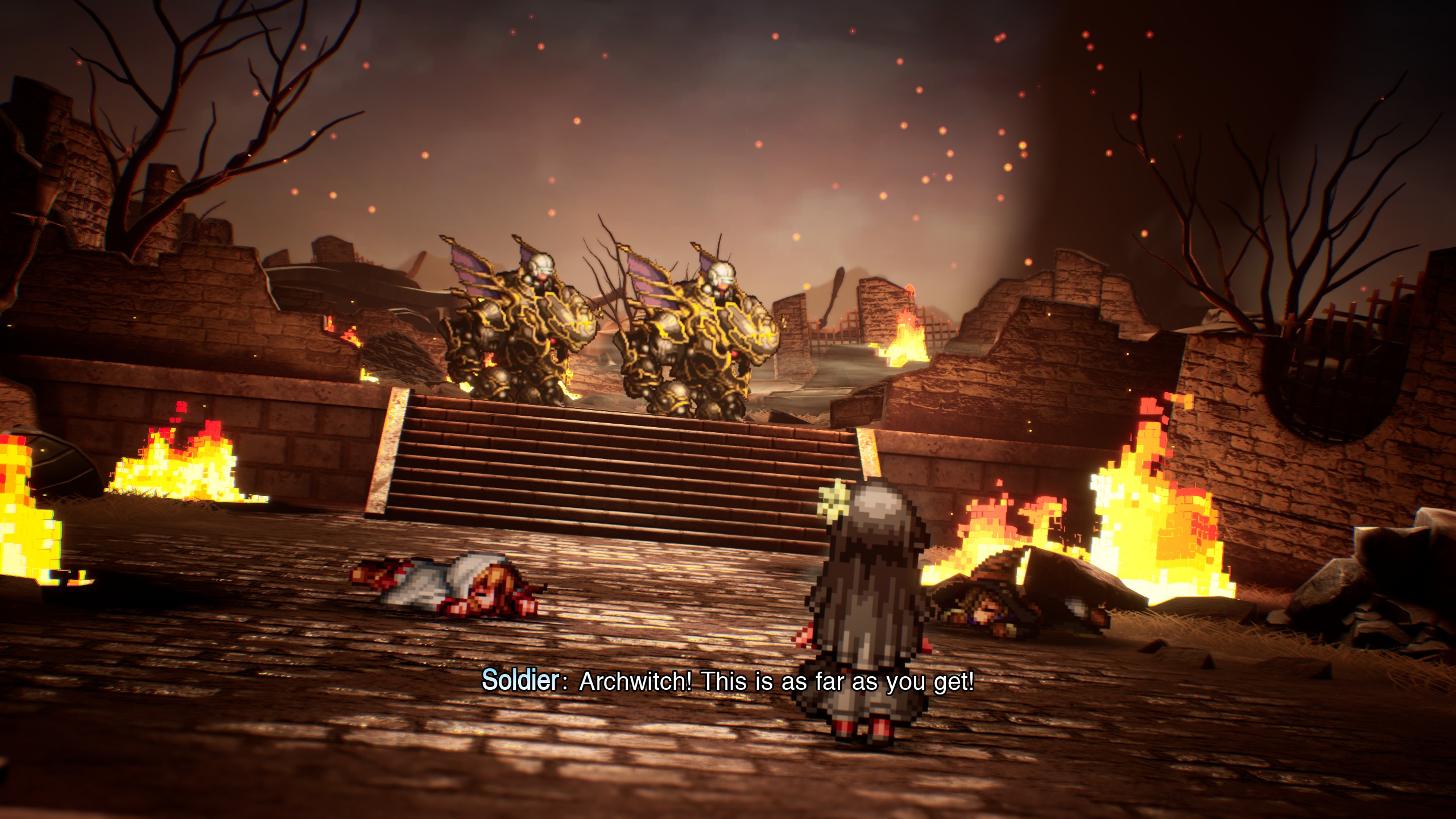
While Final Fantasy Resonance is a new entry in the series, it isn't an entirely new game. Much like last year's Octopath Traveler 0, the game is based on the first season of a mobile game, Final Fantasy Brave Exvius. As such, the story features the same protagonists and overall progression, though with tweaks and changes to make it work for a standalone PC and console game. Having never played the mobile game because of my aversion to anything with a gacha system, I cannot say how big this reworking is, but I can safely say it is a very enjoyable story in a classic sort of way.
The hero of this tale is Rain, a young commander of the Knights of Grandshelt, sworn to defend the kingdom whose prosperity, like that of the entire world of Lapis, rests on the magical Crystals that safeguard the balance of the world's elements. However, the peace the world has enjoyed for a long time is threatened by a mysterious group of armored warriors known only as the Sworn Six of Palladia, who are hell-bent on destroying the crystals to avenge an ancient betrayal. After failing to protect the Earth Crystal in Grandshelt, Rain and his childhood friend Lasswell embark on a journey to stop the Sworn Six from destroying all the Crystals and plunging Lapis into darkness, meeting new companions that will help in their endeavor. The most mysterious of them is Fina, an amnesiac girl who has the ability to summon Espers, who seems to be related in some capacity to the revenge that is motivating the Sworn Six.
Just from the premise alone, it's clear how Final Fantasy Resonance's story and characters are deeply rooted in the first six entries in the series. The callbacks are evident right from the get-go: Rain and Lasswell and the Grandshelt airships instantly brought Cecil and Kain from Final Fantasy IV to mind, while the combination of magic and technology is heavily reminiscent of Final Fantasy VI. In other cases, the connections are even more evident, such as in Mysidia, the land where mages reside, which has appeared in other entries in the series like Final Fantasy II, Final Fantasy IV, and Final Fantasy XVI in some capacity.
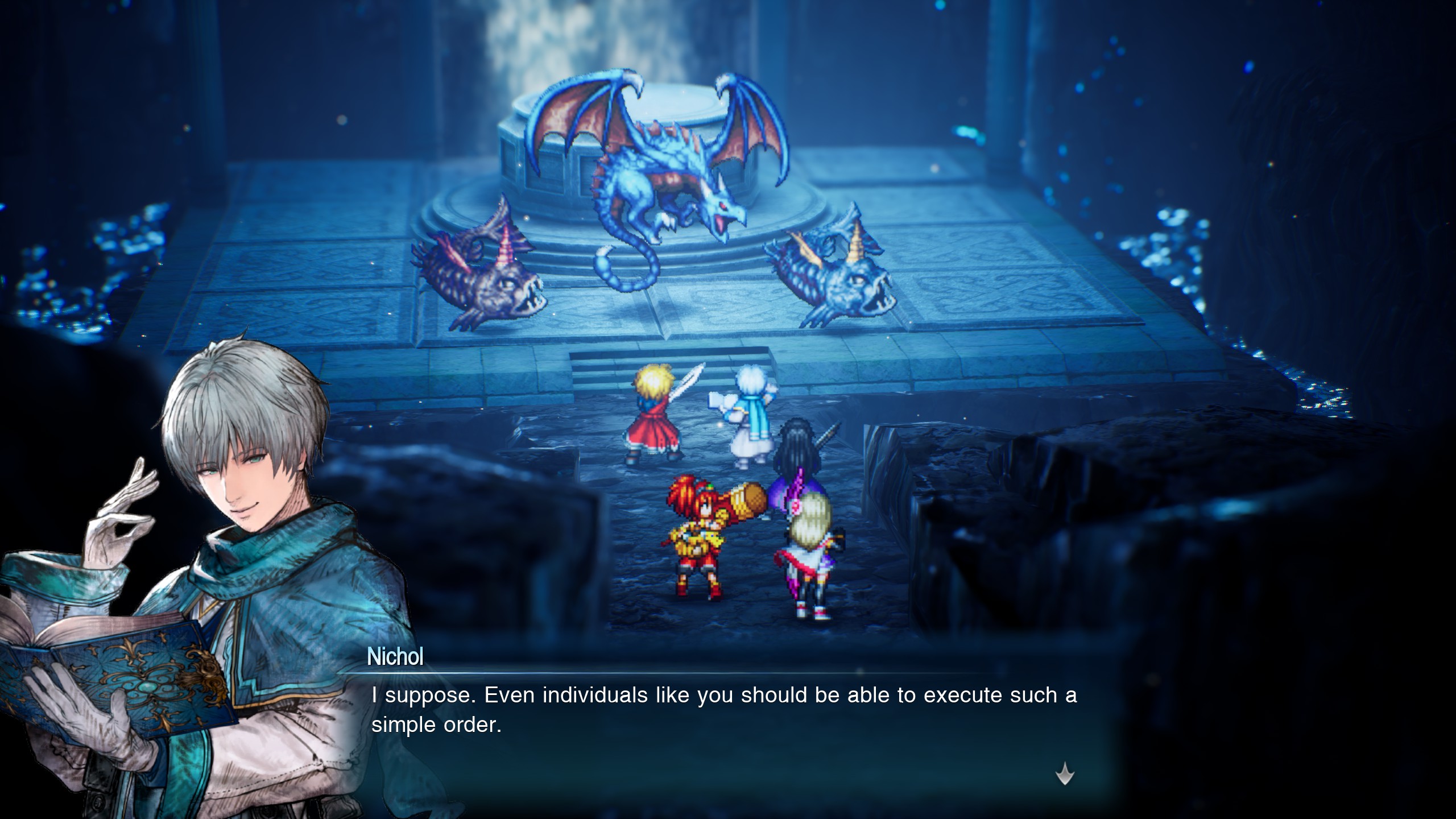
However, there's more than enough original elements to keep the player engaged. Characters are generally likable and go through moderate growth throughout the journey (although the anime-flavored writing may put some off, with attempts at humor that may feel out of place in a world-saving journey) and the mystery of the Sworn Six keeps things going nicely, especially when their characterization evolves from just being powerful beings fully clad in armor to actual characters from Chapter 2, as it's at this point that the stakes of Rain's mission become clearer.
At the end of the day, Final Fantasy Resonance's story doesn't attempt to do anything revolutionary with its plot, but it's entertaining enough even with its sometimes excessive reliance on themes seen in previous entries in the series. Moreover, it's more than adequate fully adequate to support the one element that will get most to play the game: its combat system and character progression mechanics.
As Classic As It Can Get, But With A Twist
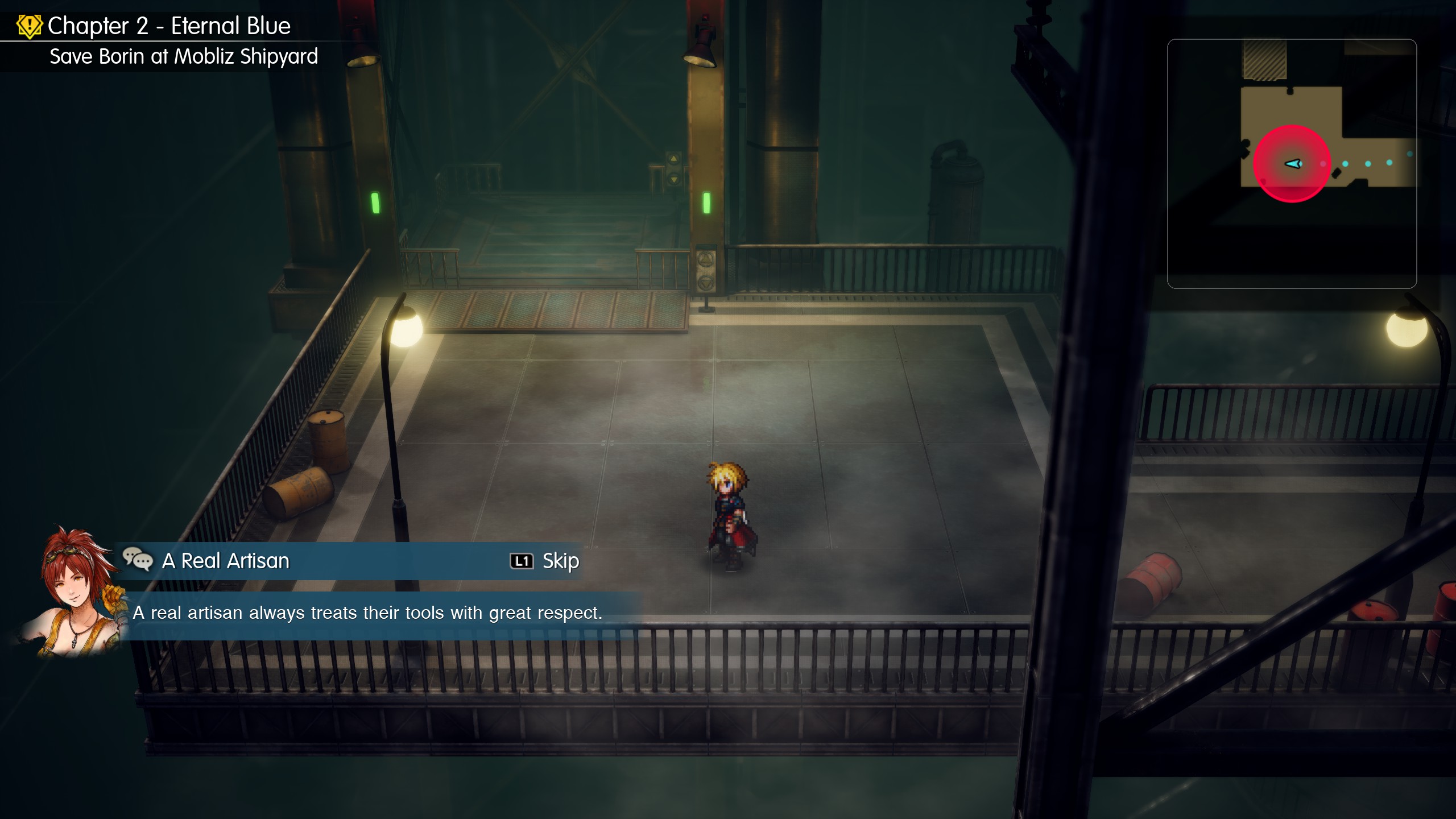
Much like for the story, Final Fantasy Resonance carries heavy vibes from the first six entries in the series. In this regard, it's almost a 1-to-1 modern recreation of the series' classic gameplay, with top-down exploration of villages, towns, and dungeons connected with a proper world map filled with more than a few secrets, including optional Esper summons for Fina, that makes its return after its last appearance in Final Fantasy IX, as do its Active Time Events, here turned into an Active Time Chat that features brief chats in the vein of Bandai Namco's Tales series.
Traversal is as straightforward as it gets: villages and towns have NPCs to talk to to learn about the world or to progress the story and accept side-quests, usually sporting their own stories that provide more world-building and character development, as well as shops to purchase items and gear, and secret items to discover, which can also be found scattered all over the world map.
Dungeons are similarly straightforward. Ranging from the small size of the first few dungeons to the bigger ones found later in the story, these locations feature some rather simple puzzles, more items to collect, and proper random encounters with no visible enemy symbols. Unlike in classic games, however, the mini-map in the top-right corner of the screen alerts the player when monsters are about to be encountered, allowing them to prepare for the upcoming confrontation. With optional paths often hiding useful items and new gear that create a sort of risk-reward situation if low on resources, Final Fantasy Resonance faithfully represents that traversal thrill that has been lost with the introduction of visible enemy encounters.
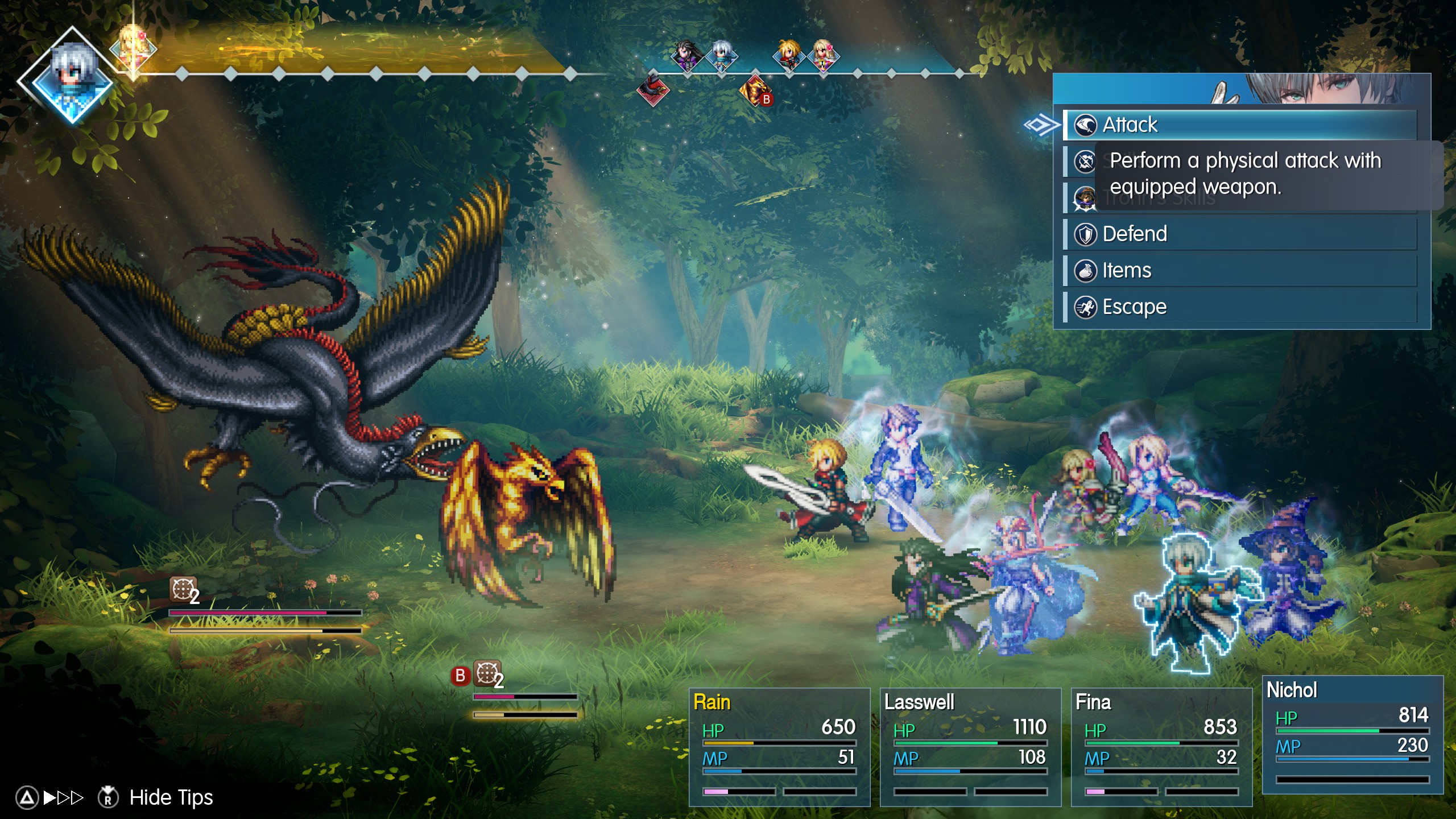
As already mentioned, Final Fantasy Resonance marks the series' return to turn-based gameplay, but with some twists. The ATB system which powered the SNES and PSX entries in the series didn't make a return, as battles are played with a pure turn-based system where the characters' speed determines the turn order. With a turn bar visible at the top of the screen, it's clear how this system is heavily based on the combat system seen in the Octopath Traveler series.
Delving deeper, it becomes even clearer how the series that launched the HD-2D visual style has deeply influenced Final Fantasy Resonance's combat system. The weakness system seen in the Octopath Traveler games, which allows the player to stun enemies if they are hit enough times with attack types they are weak against, returns, only with a tweak based on modern entries in the Final Fantasy series. Limited to elemental attacks, this new rendition of the Stagger system lets you stun enemies once the Stagger bar is filled, granting an additional Bonus Phase turn to any character who stunned an enemy. If all enemies are stunned, you will trigger a Sweeping Stagger, which not only lets every character in the combat party act again, but also lets you use a Resonance Attack, Vision's special attacks.
While some may not appreciate the return of the Stagger mechanics in a turn-based game, I have found them to add an interesting layer of depth to a combat system that would have been very straightforward otherwise. Depending on how you build your characters, you can go for either damage or Stagger, forcing you to adapt to the situation on the fly and come up with a party composition that can handle most situations.
This approach to combat works particularly well at Expert difficulty, which is very well balanced. Instead of going for an unfair difficulty setting, Final Fantasy Resonance handles this well by essentially forcing even regular enemy encounters to drag without a solid strategy. The potential tedium is more than enough to push the player to better optimize their party, and with 26 Visions granting so many customization possibilities, there was truly no better way to bring out the maximum potential of this system than with this sort of balancing.
And if you don't want to deal with the above and just enjoy a leisurely ride through the story, the Normal and Story difficulties are perfect. Normal is maybe a tad too easy, but it's solid enough at balancing ease of play with a little bit of challenge, especially during the late game and post-game, which is quite challenging without a good party setup.

Vision of a Job System
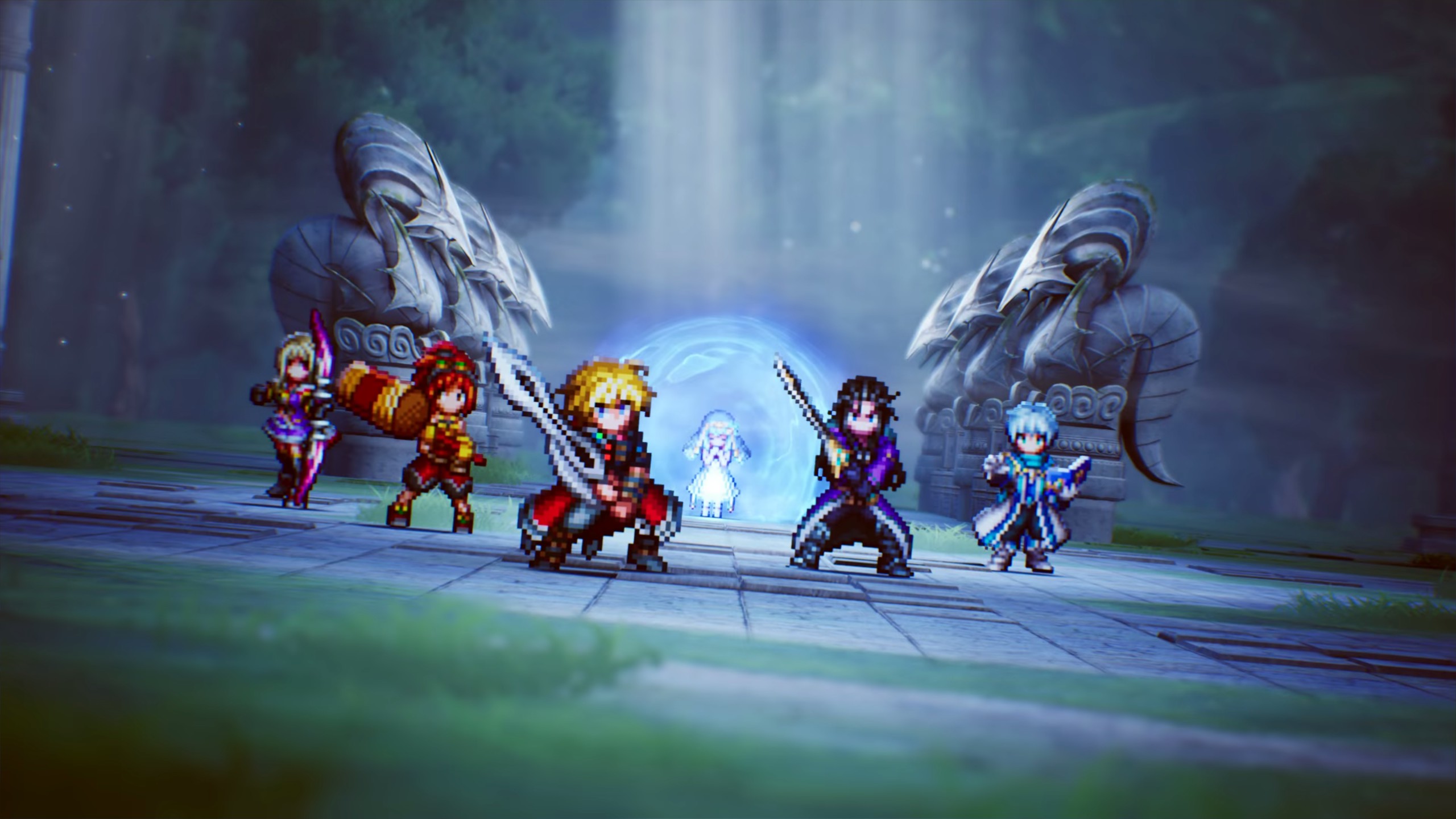
The Visions system is the beating heart of Final Fantasy Resonance's gameplay, but it's how it comes together with the game's basic character mechanics that is truly impressive. Taking a page from the Final Fantasy XIII series book, all characters in the game come with a preassigned role that cannot be changed: Rain is a Sentinel meant to tank for the party, while Lasswell is a Breaker good at staggering enemies, Fina a Medic that heals and supports the party, Lid a Commando focused on dealing damage with some unique quirks, Nichol a very effective Synergist who supports the party with Formation skills, and so on. All six Final Fantasy XIII roles are represented by a party member (Sentinel, Breaker, Medic, Commando, Synergist, and Saboteur), so each one feels very distinct even without getting into the Visions system.
As the name suggests, Visions represent the spirit of other heroes. These are divided into the Visions of original characters and of the protagonists of every mainline Final Fantasy game, from Final Fantasy to Final Fantasy XVI, and the most iconic villain of the entire franchise, Final Fantasy VII's Sephiroth, which are unlocked at Sanctums located all over the world after replying to some questions pertaining to the character, or by completing certain sidequests, in the case of original Visions. Each Vision also comes with an assigned role that determines what they are good at.
As such, it is encouraged to pair Visions and characters of the same role for maximum efficacy. However, this is rarely the true way to go. While the abilities of Visions and characters of the same role mesh well most of the time, there are equippable active and passive abilities belonging to Visions of other roles that can heavily augment each character's fighting style. Rain, for example, benefits a lot from the Warrior of Light and Cecil's abilities, yet there are abilities from other Visions that can make Rain's counter-attack style even more effective, such as Cloud's abilities, which enhance critical hits.
Even within the confines of the same roles, Visions have some wildly different playstyles, leading to so many customization options that it is a joy just to even think about the possibilities. In a lot of ways, this brings to mind what Final Fantasy V delivered, but on a much grander scale, as Visions aren't as rigid as Jobs, and their abilities synergize well across the board to deliver one of the best character customization systems in the series.
The number of options available is so huge that it can be a bit overwhelming, but its relative simplicity is where the genius lies. If you want to stick to pairing Visions and characters by role, the game doesn't penalize you, even if you miss harnessing the full potential of the system. In many ways, enemy design takes this into account, so it's possible to fully enjoy what Final Fantasy Resonance offers even without min-maxing characters, making the entire game a joy to play.
Graphics and Performance
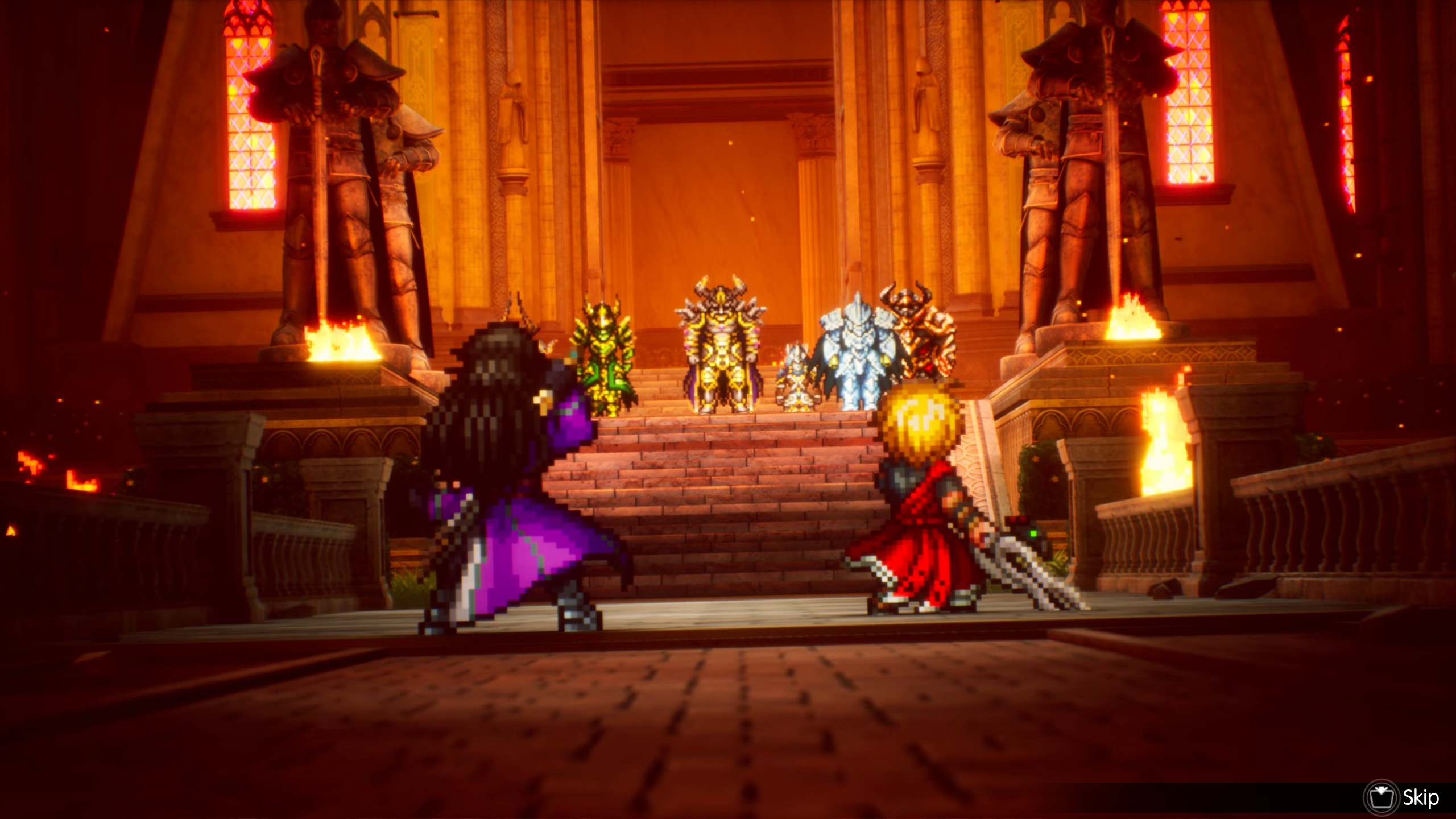
Although at a glance one might dismiss Final Fantasy Resonance as yet another HD-2D title, the new entry in the series is set to mark a new beginning for the visual style introduced by the Octopath Traveler series. Everything is a significant step forward from anything we have seen to date: sprites are bigger, more detailed, and with a lot of unique animations in and out of battle; maps are rendered in high-quality 3D, as are the battle backgrounds; special effects in battle are colorful and flashy, and convey well the power behind magic spells and attacks. However, it's one specific improvement that truly sets Final Fantasy Resonance apart from every other HD-2D game released so far: dynamic camera angles. This gives the game an incredibly cinematic feel, making cutscenes more dramatic and ultimately more enjoyable.
The best thing about this HD-2D visual showcase is that it is very undemanding. On my system (i7-13700F, RTX 4080, 32 GB RAM), the game runs at a locked 120 FPS, max settings right out of the box without any tweaking, so anyone with a relatively modern PC will be able to enjoy the game at its best. With it being so undemanding, I expect it to be a hit among the handheld gaming crowd equipped with systems like the Steam Deck, which will likely have little trouble running it well.
The Sound of Resonance
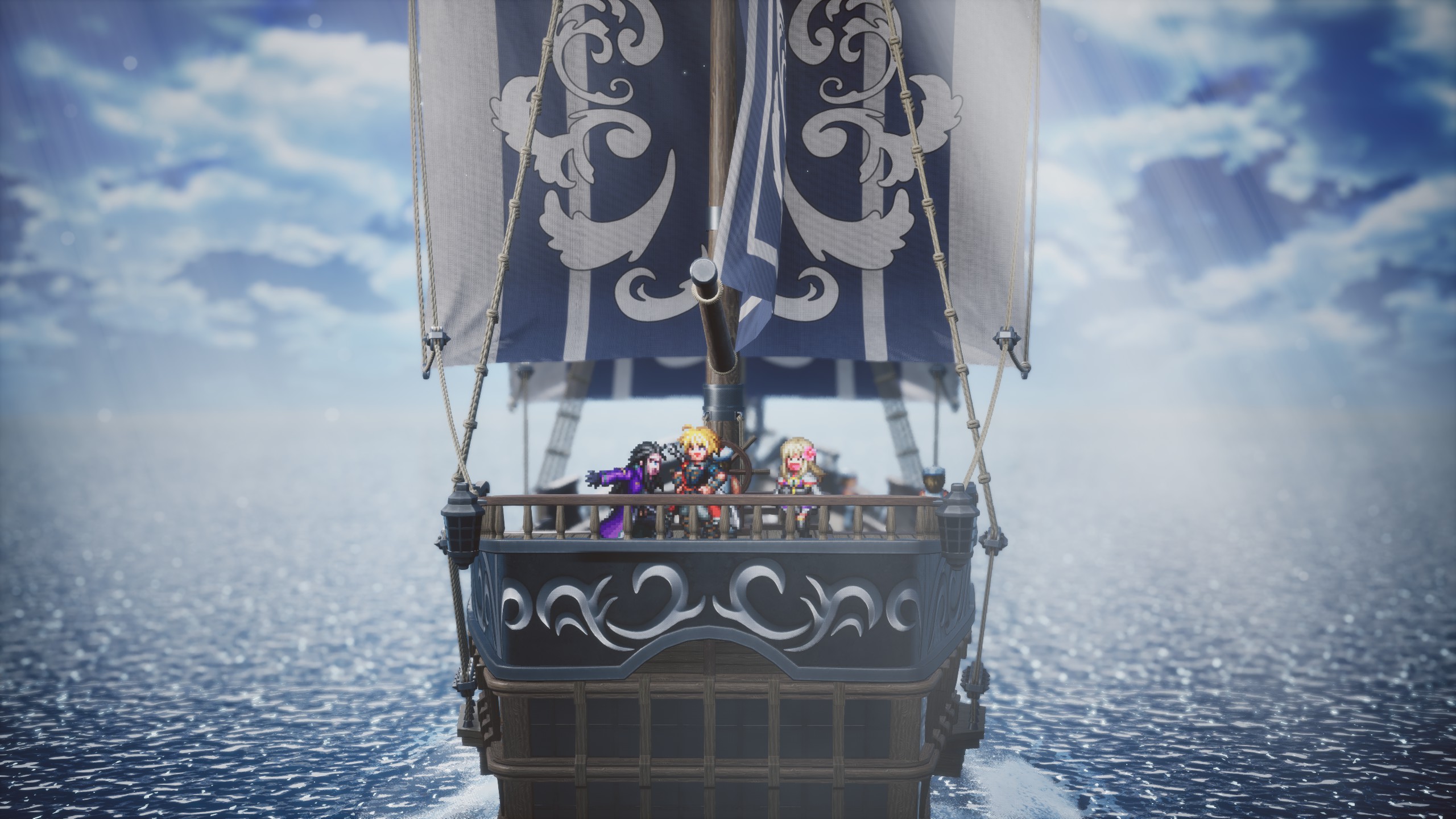
As Final Fantasy Resonance strikes a solid balance between tradition and innovation in its story, gameplay, and visuals, so it does with its music. The soundtrack is generally very good precisely for this: from the battle theme starting the same way the themes of many of the previous entries in the series do, to other tracks that carry musical themes and references from all over the series and the classic Chocobo theme in all of its cheerful glory, it's impossible not to be captivated by it, regardless of whether you are a longtime fan of the series or a newcomer.
Voice acting, on the other hand, is a little hit-and-miss. The aforementioned anime-style writing likely made it difficult for the English voice actors to deliver 100% natural performances, as there are times when the English dub sounds a little stiff. It's nothing particularly grating, but still, those looking for the best video game dub of all time won't find it here. And with the Japanese dub also available, the player is at least given a choice in how to enjoy the story cutscenes and the post-battle banter, which does a great job of showing the relationships between party members even outside of story sequences.
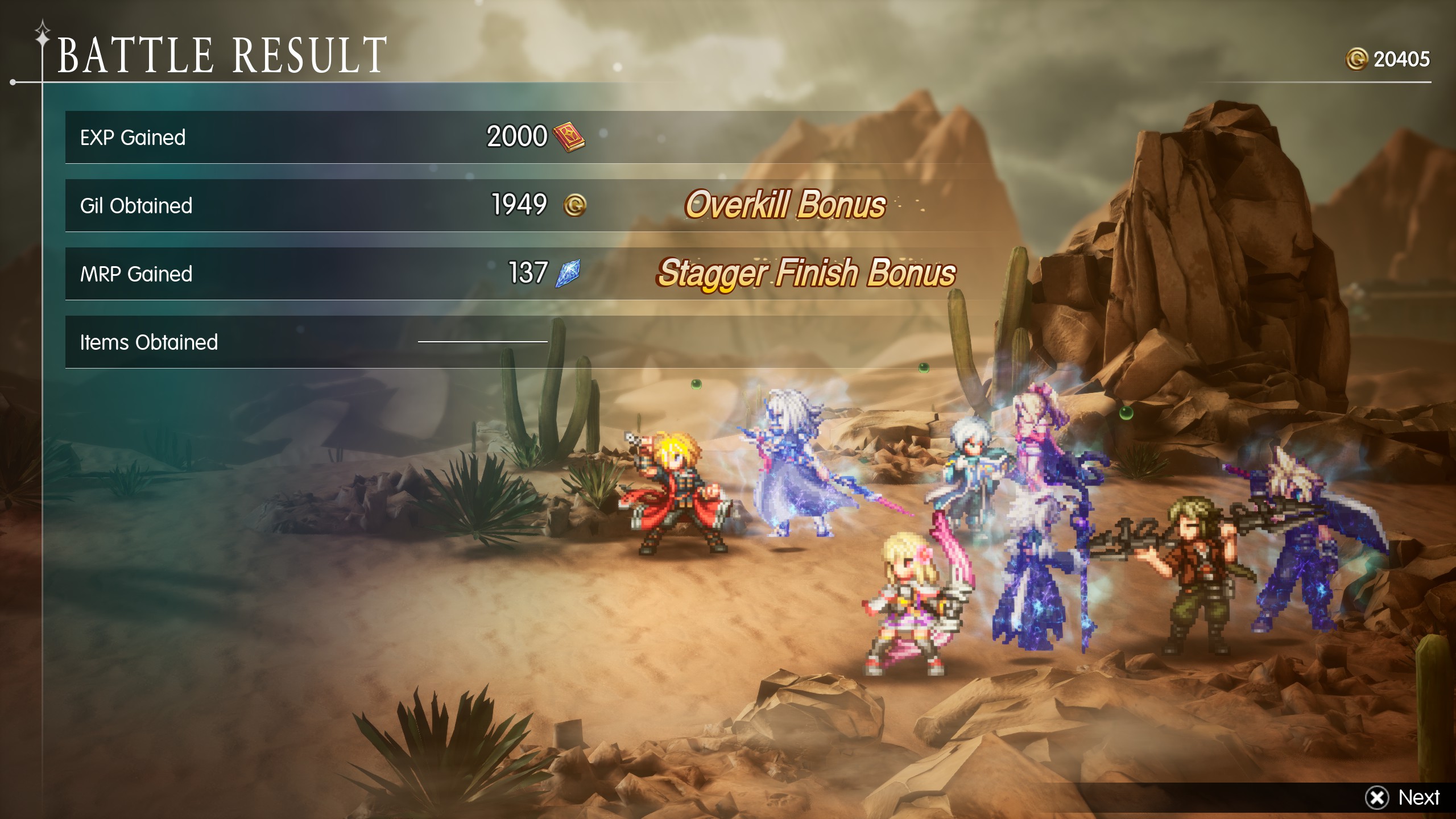
Having had a blast for the roughly 45 hours it took to beat the game, I can safely say that Final Fantasy Resonance is one of the best entries in the series to date. While the story doesn't attempt to stray away from the series' roots too much (sometimes overrelying on nostalgic callbacks), it is engaging enough to stand on its own for its entire duration, and the incredible Visions system and combat system design ensure the player is always tweaking and improving their characters to take on the powerful bosses barring their way. With a great approach to difficulty in Expert mode and the best HD-2D visuals to date, the series' return to turn-based gameplay couldn't have been more glorious, its best features far outweighing its minor flaws.
PC version tested. Review code provided by the publisher.
You can find additional information about our standard review process and ethics policy here.

9.5
WCCFTECH RATING
Final Fantasy Resonance
Final Fantasy Resonance marks a triumphant return to the series' turn-based roots. Blending classic storytelling and charming characters with a solid combat system, a deep character customization system, and the best HD-2D visuals to date, the game delivers an engaging RPG experience that honors the series' legacy and would have every right to be a new beginning for the entire franchise.
- Solid story with a charming cast of main characters
- Simple yet solid turn-based combat system
- Exceptional character customization with the Visions system
- Fantastic soundtrack with references to classic series themes
- Masterfully balanced Expert difficulty that pushes for refined character customization
- The best HD-2D visuals to date
Pros
- English voice acting can feel stiff at times.
- Though solid, the story's callback to previous entries in the series can feel a bit excessive
Cons
Buy for from Amazon The links above are affiliate links. As an Amazon Associate, Wccftech.com may earn from qualifying purchases.

About the author: Francesco De Meo has been covering video games and technology since 2012, starting his career at small outlets like Gamersyndrome and GeekSnack. After joining Wccftech gaming section in 2015, he quickly expanded his video gaming coverage with in-depth reporting, interviews with iconic industry figures such as Grasshopper Manufacture founder and No More Heroes creator Goichi "Suda51" Suda, Resident Evil series creator Shinji Mikami, Team NINJA's president and Nioh series director Fumihiko Yasuda, and Silent Hill creator Keiichiro Toyama, reviews and on-the-ground coverage of major industry events such as Gamescom and E3. When he's not reporting or reviewing, Francesco can be found playing the genres he loves most, spending time with his six cats, reading, writing music, playing guitar and drumming for his progressive rock band.
Follow Wccftech on Google to get more of our news coverage in your feeds.
来源:Wccftech · wccftech.com