访谈:"FromSoftware 曾是个绝佳的工作场所" —— Shinji Usui 谈 Metal Wolf、Chromehounds 等
Interview: "FromSoftware Was a Wonderful Workplace" - Shinji Usui on Metal Wolf, Chromehounds And More
Shinji Usui 在访谈中表示 FromSoftware 曾是个绝佳的工作场所,并回顾了其为 Metal Wolf Chaos 与 Chromehounds 设计机甲的经历。
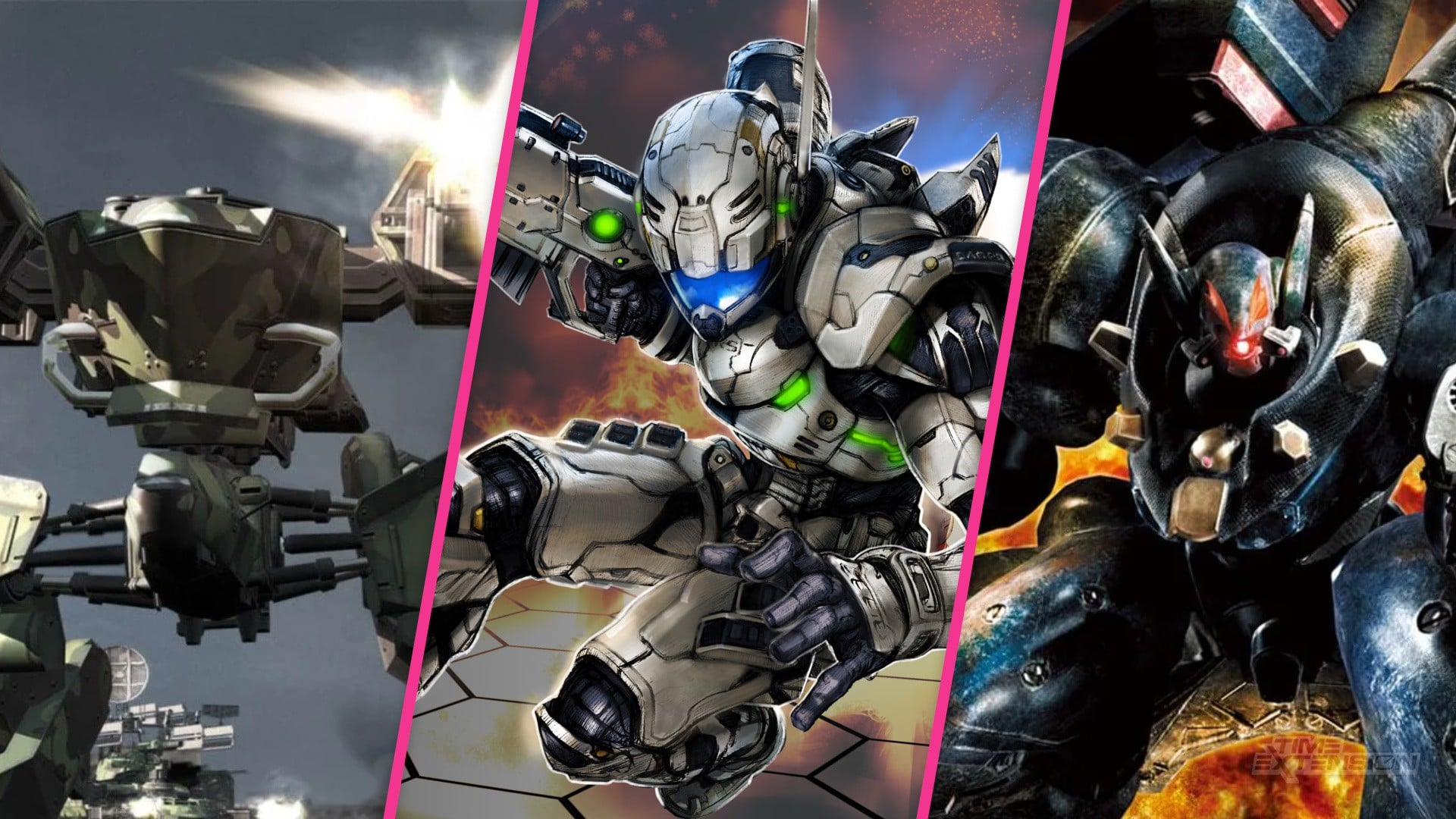
One of the biggest mistakes people make about the Japanese games industry is thinking it's separate from things like anime and toys. The reality is that, at least in mecha-related media, these industries are connected and share the same creative talent. Shinji Usui is a wonderful example of this, having worked across video games, anime, and toys.
In the realm of gaming, his credits are considerable, include Metal Wolf Chaos, Chromehounds, Vanquish, Armored Core: Nexus, Mobile Suit Gundam: Zeonic Front, Dillon's Dead-Heat Breakers, Sonic Unleashed and Valkyria Revolution.
It's also worth clarifying up front that I have actually worked with Usui in the past, and we are friends. I literally sat opposite him at work, and he'd often chat to me about mecha anime and games. However, he also had a deep love of science fiction, which he discovered as a kid.
"When I was growing up, weekly manga magazines and television anime were flourishing in the 1980s," he tells me. "Naturally, I became fascinated with robot anime aimed at boys. I had an older brother who was four years older than me, so I think I was exposed to science fiction intended for older audiences earlier than most of my friends of the same age. I was really into works such as Akira, Ghost in the Shell, Star Trek, Escape from New York, and Blade Runner as they were coming out. By the time I was in high school, I had also developed an interest in motorcycles, and my friends and I avidly read all the magazines we could find about them.
"Around this time, Nintendo’s Game & Watch and the Famicom were hugely popular, so I became absorbed in games in much the same way as everyone else did—as something fun to play. It was only after I had entered the workforce that I became interested in games professionally.
"My first job was at a toy development company, and I subsequently worked at a design firm involved in the design and development of industrial products ranging from everyday goods to medical equipment and automobiles. Around that time, I remember being captivated by the arrival of the PlayStation and the impressive quality of its visuals and 3D graphics. That led to my interest in 3D CG and game development, and I subsequently changed careers and entered the games industry."
Working At FromSoftware On Metal Wolf Chaos And Chromehounds
One of Usui's first jobs in the games industry was at FromSoftware, where he did the mecha designs for games like Metal Wolf Chaos and later Chromehounds.
"FromSoftware was a wonderful workplace where I was able to seriously work on designing the mechanics, worlds, and other elements that appeared in games," he explains. "Development periods back then were considerably shorter, probably around one or two years. Things changed at a dizzying pace, which made it extremely interesting, and there was an enormous number of items that had to be completed. There were also many original titles, so the experience of being involved from the early stages of development was extremely valuable.
"With Metal Wolf Chaos, the game concept was built around the exhilarating feeling of destruction. From an early stage, the game was designed around equipping the player’s machine with a large number of weapons of various types and selecting the appropriate weapons depending on the situation.
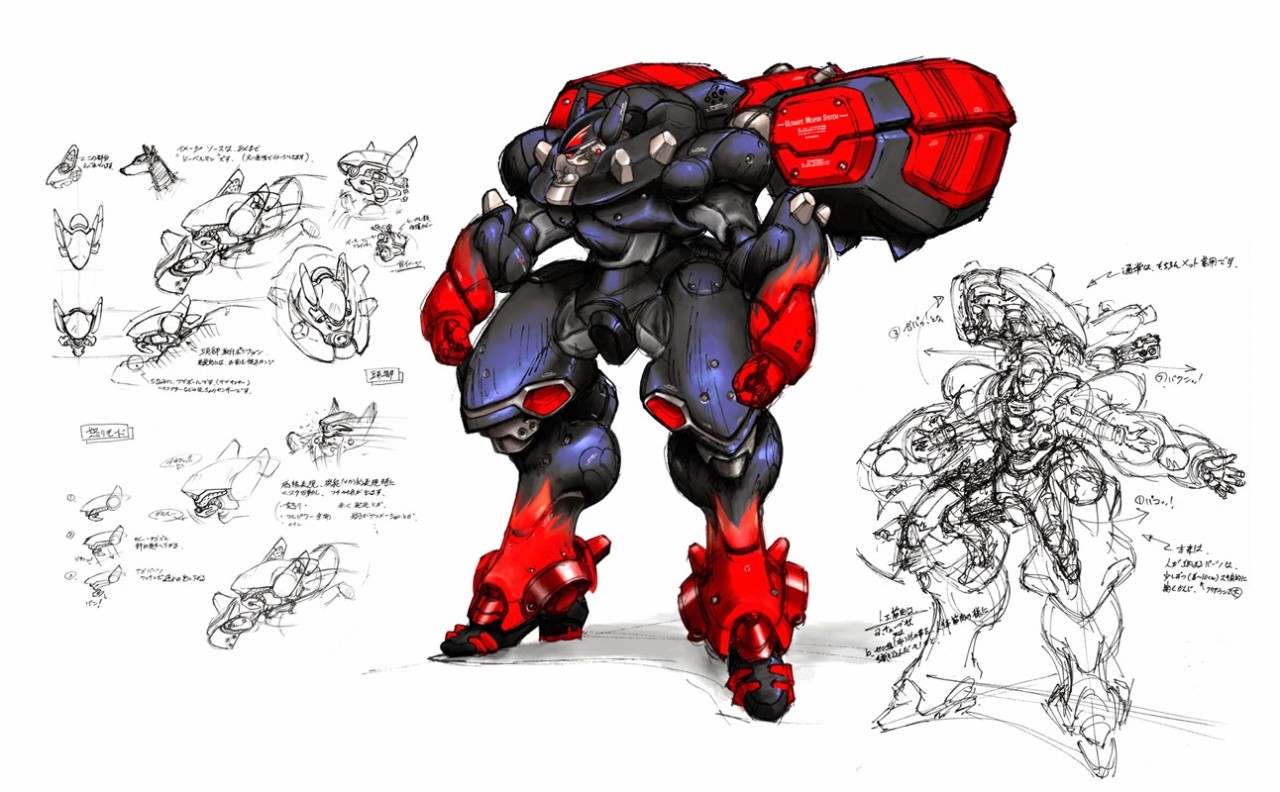
"The title changed several times during development. I joined the project around the time when the name “Dogs” was being used, and I designed the powered suit with the image of a powerful character like a Doberman in mind. As development progressed, the setting, story, and characters began to emerge from the planning side, but the producer’s overall vision was one that sought to throw conventional thinking out of the window.
"The protagonist was the President of the United States, and rather than having him behave in ways anyone could easily imagine, the idea was to pursue unexpected developments that would surprise people. I think it was in responding to that vision that the deliberately extreme world and mechanical designs came into being.
"Chromehounds, meanwhile, was a new challenge involving online multiplayer and the transition in hardware to the Xbox 360. I remember that the concept design process was difficult because it was a new title and we needed to differentiate it from Armored Core.
"We wanted to depict a gritty, down-to-earth battlefield, and for the mechanics that appeared in the game, we explored a wide variety of ideas aimed at creating realistic visuals, with machines powered by engines that almost seemed to reek of oil.
"Based on the concept of multi-legged tanks operating in a world inspired by World War II, I came up with the idea of using simple geometric forms as design motifs: circles, triangles, and squares. That became the concept behind the machine designs. From there, the idea solidified into customizing machines by combining modular power systems, weapons, avionics, and other electronic devices. I think being able to design the ideas behind the machine systems alongside the actual game mechanics was an extremely good development process."
Moving Onto PlatinumGames And Vanquish
After his work at FromSoftware, Usui moved onto PlatinumGames and worked as the mecha designer on games like Vanquish.
"Through an acquaintance who was working at PlatinumGames, I heard that they were developing a title that required mechanical design work," says Usui. "That led to me meeting the director, Shinji Mikami, and that was how it all began.
"With Vanquish, by the time I became involved, the initial development had already progressed considerably, and I believe there was already a playable stage. However, they were severely lacking character designs for the allies, enemies, and other elements that would appear in the game.
"I was completely focused on producing designs, so I do not remember the overall production process particularly well. I had previously worked in game development at several companies in the Kanto region of Japan, but I was surprised by how different the development environment, style, and processes were in Kansai. It was an intense and refreshing new stimulus for me.
"The foremost objective was always to make something enjoyable for the player, and there was a determination to thoroughly revise and improve anything necessary to achieve that. I later came to realize that this was the game development style and philosophy established by Shinji Mikami and Tatsuya Minami. It was an extremely valuable experience for me."
Working In Anime, From Ghost In The Shell To The Legend Of Galactic Heroes
It was here that Usui moved into the world of anime and used his CG experience and mecha design skills on various famous series, such as Ghost in the Shell and The Legend of Galactic Heroes.
"The starting point was joining a studio working on a feature-length CG animated production directed by Shinji Aramaki, whom I had met while I was previously working at Sega. Through that experience, I became involved with people at several different anime production studios.
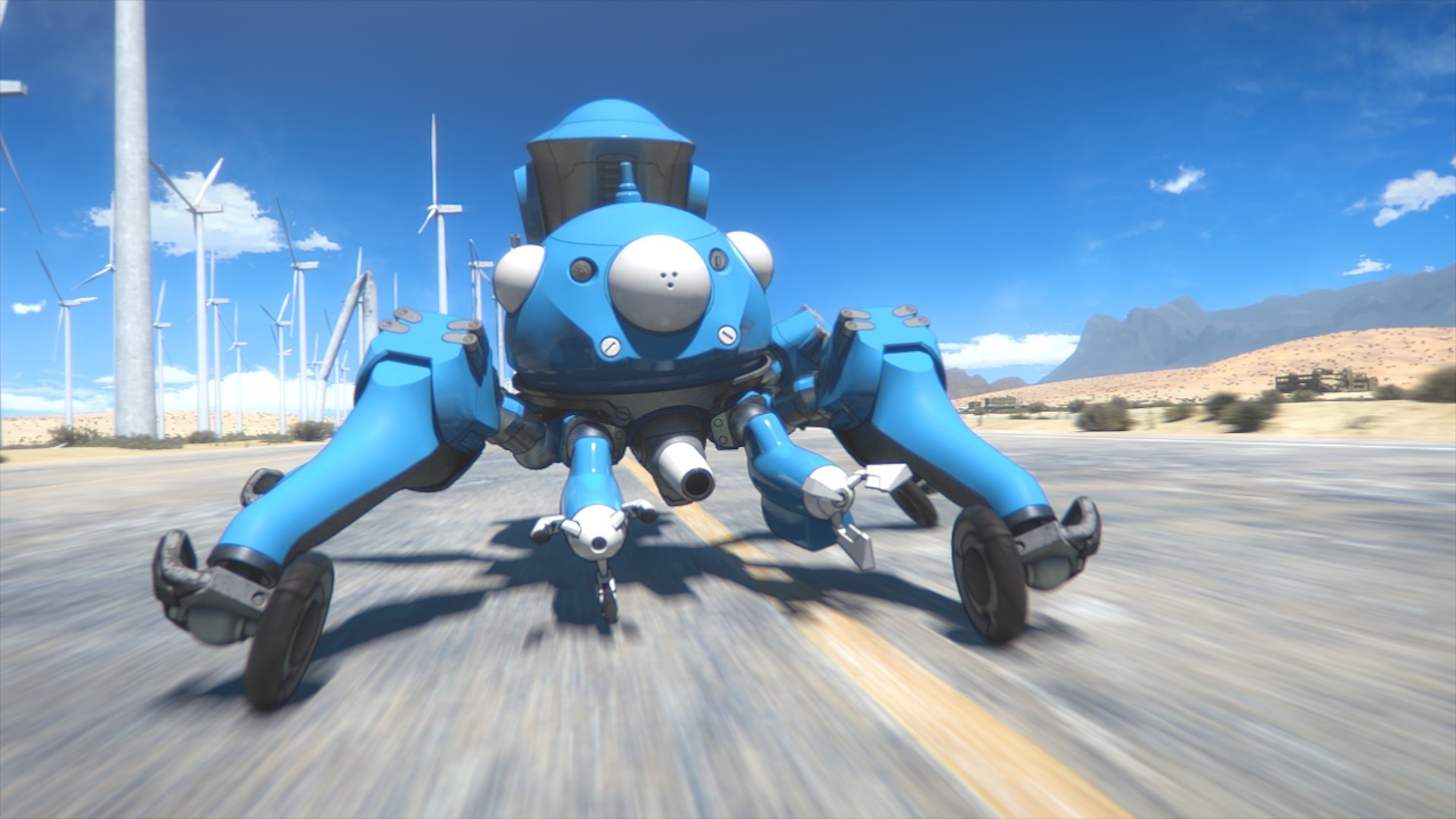
"For Ghost in the Shell: SAC_2045, one of director Kenji Kamiyama’s requirements was that the new Tachikoma, which would operate alongside the members of Public Security Section 9, should be smaller. We envisioned this smaller size expanding the range of situations in which it could be used, for example, being small enough to fit normally inside a building elevator or to ride in a car with the characters.
"At the same time, I developed the design by combining the imagery of the Tachikoma from the previous series with that of the Fuchikoma from the original manga, while incorporating new elements unique to this production. We incorporated various ideas during that process, and I think the resulting design worked particularly well in action scenes and similar situations.
"With The Legend of Galactic Heroes: Die Neue These, because the story had previously been adapted for animation, I approached the new designs with both the generation familiar with the earlier adaptation and a new generation who might not yet know the series in mind.
"Fortunately, I was involved from an early stage, so director Shunsuke Tada, mechanical designer Atsushi Takeuchi, and I were able to exchange many ideas and opinions while building the setting around the fundamental premise of a world in which interstellar travel technology exists.
"As a result, we explicitly incorporated systems such as long-distance warp drives for interstellar travel and conventional drives into the designs. The contrasting structures of the opposing sides’ ships also influenced their styling, allowing us to visually differentiate them. That became one of the central concepts guiding the designs."
Considering that Usui has worked across so many different properties, from games to anime, I was curious how the creative process differed.
"I believe game development has to begin with the fundamental premise that the player is actually playing the game and that it is a form of play," he replies. "The designs therefore need to make that play more enjoyable, or, put another way, they need to avoid interfering with the gameplay.
"With anime and other visual productions, on the other hand, the audience cannot freely interact with and explore the world themselves, so I think developing designs that are visually and conceptually compelling becomes even more important.
"Whether I am working with the visual language of a realistic world or that of a fantasy setting, I first try to imagine and establish a convincing background for the design while also incorporating elements that are immediately striking and memorable. If you focus too heavily on constructing everything logically, you can end up with a design that is not visually interesting. So I believe you also need a certain degree of bold theatricality—in Japanese, what we call "kerenmi" (外連味)."
Finishing up, I wonder what Usui wanted to tackle creatively in the future.
“Even as the world around us continues to change at a dizzying pace, I want to keep doing my best to contribute, however I can, to games, visual productions, and other works that can genuinely move people and remain in their memories. In terms of my own skills, I still feel that there is a great deal I need to learn, and I want to continue studying and improving myself. If I ever have the opportunity, I also have a dream of creating an open-world game where players can fully immerse themselves in an incredibly captivating world.”
来源:Time Extension · timeextension.com