《Witchfire》创始人 Adrian Chmielarz 拒绝几乎各方收购保持独立,代价约十年开发
Witchfire’s Adrian Chmielarz Turned Down Offers From ‘Basically Everybody’ to Stay Independent, but the Price Was a Roughly 10-Year Development
《Witchfire》开发商 The Astronauts 创始人 Adrian Chmielarz 表示,为保持完全独立拒绝几乎各方收购提议,代价是游戏开发近十年。
访谈披露 Witchfire 拒绝各方收购保持独立,代价近十年开发,折射小团队自主与工期的现实权衡。
Indie Polish developer The Astronauts has released only one game since its founding: the 2014 award-winning horror adventure title The Vanishing of Ethan Carter. However, the studio was established by former People Can Fly founders, who had worked on games such as Painkiller, Gears of War, and Bulletstorm.
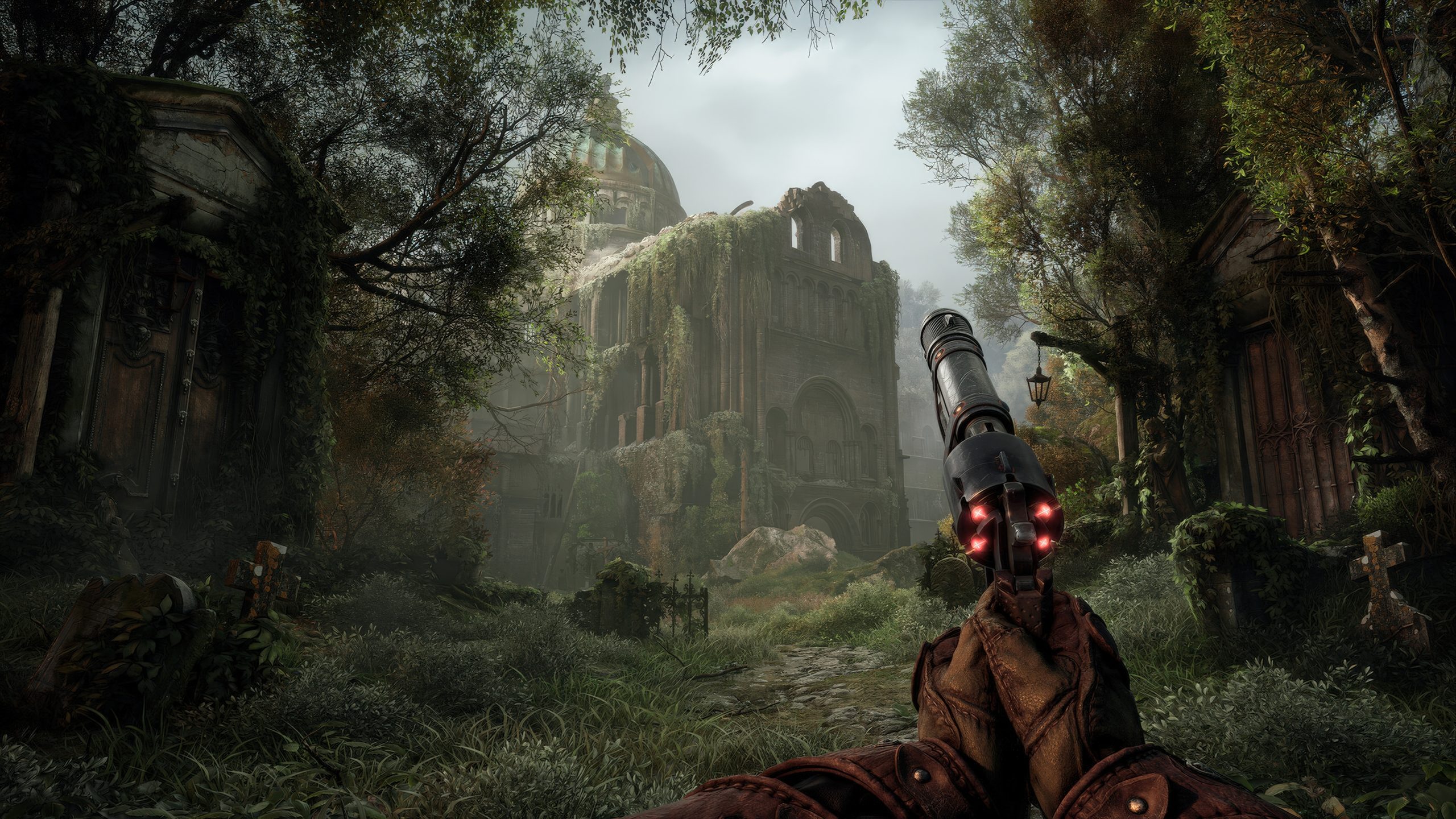
It is, therefore, far from shocking that they would return to their favorite genre: shooters. Witchfire, a first-person dark fantasy RPG shooter, was first unveiled nearly nine years ago, but it's now nearing its full completion following over three years in early access. As this momentous occasion gets closer, we caught up with The Astronauts founder and game director Adrian Chmielarz, who was all too happy to chat at length about the state of the studio, the game's long journey to 1.0 (with the exact release date still to be finalized, and all sorts of industry-wide topics, from AI to Unreal Engine 6. Strap in for a long, insightful read, which you can navigate more easily with the chapter links below.
- The Long Road to Witchfire
- Pivots, Early Access, and How to Use Player Feedback
- Building Toward 1.0
- Engines, AI, and DLSS 5
- Playtime, Scope, and Nailing the Launch Date
The Long Road to Witchfire
Adrian, it's been a long time. Witchfire was announced, I think, almost nine years ago, correct?
Adrian Chmielarz: Yes, that was The Game Awards 2017.
I’m guessing you didn't expect it to take this long, right? Or were you prepared for a long development?
Adrian Chmielarz: No, we didn’t. Considering that we’ve done the whole of Painkiller in two years, starting literally from scratch—we had no engine, zero lines of code, and not a single pixel of graphics—and we still made Painkiller in two years. Of course, that was easier: less polish, simpler assets, but still, right?
But in the case of Witchfire, it was inevitable because I wanted to be very careful with the money. All the previous projects, I mostly didn’t have to care because Bulletstorm was paid by Electronic Arts, and Dreamcatcher paid for Painkiller. We always care about the money, but it’s not exactly the same when you’re responsible with your own money for the entire studio, the entire project, every single teammate.
I didn’t want to risk scaling too early. Another thing was that we didn’t want any investors. We wanted to remain truly independent. We had proposals from basically everybody you can imagine, but we never sold any piece of the studio. These are the good things, right? Because we were always fiscally responsible and we remained independent. But the cost is that the game will take basically 10 years to make.
How many employees do you have now at The Astronauts?
Adrian Chmielarz: That’s always misleading, because I can tell you the number (it’s 26), and it tells you nothing because in reality there’s way more people working on it. It’s the same thing as with Clair Obscur: Expedition 33. You hear these legends about the team being 30, and then when the credits appear at the end of the game, they scroll for half an hour.
Because co-development is big now.
Adrian Chmielarz: You have to have it. It’s a smart way to work for Indies, for example, because you need to ask yourself a question: do you really need a composer on board, one who is your employee? The answer is obviously no, because you can request the music, and in a month or two, you get it, and then you shake hands and go about your day.
But then you start thinking, maybe character artists—do I really need a character artist that is 24-7 at the studio? Then you realize, no, you don’t. You can outsource your character art to great, wonderful artists. It’s not like Witchfire was made by 500 people, but it’s 26 of us. This is the core of Witchfire, but we cooperate with people from the studios that make trailers for us to concept artists.
Pivots, Early Access, and How to Use Player Feedback
I remember you were planning to launch Witchfire in early access in 2022, but it was delayed to add open world elements.
Adrian Chmielarz: It seems like there’s always this moment in the middle of the development of The Astronauts’ projects that turns the game into something else. With The Vanishing of Ethan Carter, for example, it was the same story.
Originally, the plan was to release something like Dear Esther, so very simple. The story wasn’t supposed to be simple, but the gameplay was supposed to be simple or almost non-existent. This was the time when walking simulators were all the rage. That was supposed to take just a year. But then, in the middle of it, we realized that we enjoy the language of games. We enjoy gameplay. So let’s turn it into something a bit more interactive. We’ve added puzzles and interactivity, and that's cost us another year. Double the money, double the time.
With Witchfire, it was the same story, because if we kept the original design, which was more like a Killing Floor game, we had all these environments that we have now, but you were going from arena to arena, and the path was randomized. Imagine Killing Floor meets Slay the Spire in first person. But then I looked at it, and I’m like, that’s stupid. We have all these beautiful lands that are just there unused, so let’s pivot. Let’s change the design completely. Let’s turn it into this semi-open world—we call it open levels game.
That was a really big deal, really hard to pull off, but that’s what we wanted to do. I’m a big fan of immersive sims, and that’s the direction we wanted to go in.
Was it well-received once the game actually launched in early access, this more open world?
Adrian Chmielarz: Oh, yeah. We were lucky to have a great reception from the players. Lucky is only half of it, but we were lucky to have a great reception. But on the other hand, we were very responsive to the feedback. Meaning that the biggest pain points that the players had with the initial release, we fixed in literally a couple of days. That also helped.
We copied what Supergiant was doing with Hades because I felt like that’s the right way to go. Meaning that they started on the Epic Games Store, which gave them extra money for extra development time. Didn’t have to sell any piece of the studio.
The pool of players was smaller, right? Because it’s EGS. It’s no secret. It’s a smaller shop compared to Steam, of course. You have a smaller number of players, probably more hardcore if they decided to buy an early access game on EGS. You have the extra money for extra development time and features and more stuff to put into the game.
Hades did that, and then a year later, they released on Steam. But at that time, that game was way more advanced because they spent an entire year making it better based on the feedback from the EGS players. We simply copied the same route. For a year, we grew the game. We released a couple of big updates and made the core loops better and started adding some lore into the game. When it launched in early access on Steam, it was way more mature.
In a way, that was a big win for everybody because EGS players got something exclusive. Epic got something exclusive. We got the money to make a better game. Steam players ultimately got something that was way more mature and advanced for early access. I think that worked pretty well.
Some games that have timed exclusivity on the Epic Games Store and then launch on Steam often face community backlash, resulting in negative review scores. But that didn't seem to happen to your game. Why do you think that was the case?
Adrian Chmielarz: It didn’t, but it’s a good question. Why was that the case, right? Why didn’t people tell us to go back to EGS? There were a couple of guys, but there’s always trolls everywhere. This was like a 0.0001%. It’s a very good question. I think some of it was because we are very transparent with our development. We told everybody. We explained clearly what happened and why.
Using Hades’ example made some people think twice before writing something negative about the game, because how can you argue with that? Hades is a fantastic game. A part of that success is exactly the route that they’ve chosen: the route of growth and expanding the game slowly. How do you argue with that? I think transparency, using the Hades example, and simply delivering a good game was something that worked nicely.
Now that you are almost at the end of Witchfire's long early access phase, is there any specific feedback that came from the players that you didn't anticipate at first, but eventually you realized, okay, this is right, and it's going to make for a better game if we change it?
Adrian Chmielarz: We get feedback constantly, and in a way it’s always surprising because if we knew about it, we wouldn’t have released the game in such a state, with this particular issue. In a way, every feedback is surprising, and we think to ourselves, why didn’t we think of that? I do believe that games require extensive testing at basically every stage of development, and it definitely pays off.
I think modern players are very sophisticated. They are very knowledgeable. There is this saying in game development that when the player says something is wrong with the game, they are always right. But when they tell you how to fix it, they are always wrong. I think that no longer applies. There’s a lot of players who have played thousands of games and have great experience and a certain talent for feedback and are getting good feedback. We simply listen to them.
Of course, ultimately, the decision is ours. We make this game for the players, but we try to make sure they do not optimize the fun out of it. Ultimately, it’s always our decision, but we constantly monitor Discord, Reddit, and Steam.
Our Community Manager, Spike, posts a recap of everything that’s been said by the players over the last week every Wednesday on our own company Discord. From funny moments and some crazy boss fights to bug reports or negative reviews, we can either cry or learn something. We spend a lot of time with the players and their feedback.
Building Toward 1.0
That's definitely important, especially nowadays. I also wanted to ask: with the 1.0 version of Witchfire, will there be a bit more of a storyline, or do you still plan for it to be more of a sandbox-type game?
Adrian Chmielarz: No. Whoever played the latest update, 0.9, Revelations—there is a quest. We’ve added a new map called Marshland, and there is a big quest that you can do when your expedition takes you there. We are expanding this to the entire game, and more, actually.
Maybe shocking is the wrong word, but people are not, I think, anticipating the level of the story that we’ll be adding. We are not turning it into Witcher 5, but still, there’ll be way more story and lore and investigations and things to examine and learn from than we have so far combined.
That sounds good. I like story.
Adrian Chmielarz: Me too. Every single game that I’ve made in my life, even if it was a simple shooter, always had to have a story. I care about this a lot. We spent an extraordinary amount of time making sure the story matters. It’s not an excuse for combat. It’s really a part of Witchfire DNA.
A few questions from the existing Witchfire fans. A big one that, even in the most recent frequently asked questions, you didn't confirm yet: is there going to be a save wipe? Do you know already, or is it still TBD?
Adrian Chmielarz: Currently, unless we encounter technical issues we are not anticipating at this moment, we’re not going to do the wipe. We are respecting the player’s time. Some people have invested hundreds of hours in our game, and we don’t want to tell them it doesn’t matter.
It’s extra work, of course, because you might need to make sure that the saves are compatible with 1.0, but we’re not going to delete your progress. Again, unless there’s just no other option. We will, however, recommend starting from scratch because of the story we just talked about. This really changes the game and the vibe, and we actually change a lot in the environments right now.
I think even people who know the game inside out, better than us, will be surprised at some of the changes. We are not killing ourselves, but at the same time, we will encourage everybody to start from scratch.
Is there going to be a bit more character progression stuff to unlock in the launch version of Witchfire?
Adrian Chmielarz: I think the core of it is there. The reason I’m thinking is because there’s so much stuff that we’re adding to 1.0 that I’m trying to figure out if there is anything new. We are expanding on the tools that you already have. From that point of view, sure. Actually, there will be one. There will be something not too big, but still very cool. We still have a lot of surprises up our sleeve.
1.0 will be the culmination of all these years: our own design, player feedback, everything put together in one big package. I think the players will be able to express themselves in a way they want, which was the entire thing behind Witchfire design.
I’m a big believer in the Pence model, and I don’t want to go into a theory of design. I could talk about this for hours, but core elements of such design are, for example, player autonomy and the ability to express mastery. These are the things that we are definitely [focused on].
I was always hoping for that to happen, and it happened many times already, but there are people out there that are simply much better at the game than any of us, and are annihilating bosses in 15 seconds, and doing extreme challenges, runs that I would be too afraid to even attempt. On the other hand, you have people complaining that the game is too hard, and it’s up for them. That might very well be true, but it shows that you really can try to find your own way through Witchfire.
Without going into too much detail, what are your post-launch plans with Witchfire? Are you going to add even paid DLC at some point or just free updates?
Adrian Chmielarz: We’re still discussing that. One thing that’s for sure, and it’s not a surprise: we’re going to be working on a console version. But other than this, we’re still debating this because there are two extremes and, of course, anything in between.
One extreme is what Dead Souls have done. That game was supported for six, seven years, maybe supported even today with new updates, new map, new mechanics. Seriously, it was almost like a live-service game. A single-player offline live-service game. But on the other hand, you have a game like Hades, which was just, “Hey, here’s 1.0, and we’re done.”
I remember somebody, when the game was released, asked Supergiant, “What’s next? Are you going to do DLC? Are you going to support the game?” And so on and so forth. The answer was, “No, man, that’s it. This is what we worked on for so long. This is 1.0. This is the game. Enjoy it.”
I also love that approach, because then you’re not thinking, “Maybe I shouldn’t play it right now because in half a year, there’s going to be a DLC or something.” We’re still debating that. But from my perspective, what you’re getting is a complete story. Everything is there. I would just play it.
Engines, AI, and DLSS 5
Can you share a bit of how the console versions of Witchfire are looking right now? What stage are they at?

Adrian Chmielarz: They’re at the completely non-existent stage. We are organizing the development kits, but we are right now 100% focused on the PC version. There’s no point in dealing with the console version right now before we’re done with the PC version. Unlike GTA, we start on PC and then move to consoles. That’s what we’re going for.
I think Witchfire runs on Unreal Engine 4, right?
Adrian Chmielarz: Yeah. When we started, Unreal Engine 5 was not production-ready yet. We didn’t want to switch because we felt like we could achieve everything we wanted to achieve on 4. In a way, 5 is actually 4 with some extra modules. The only reason Unreal Engine 5 is called 5 is because of PlayStation 5, and the way both were presented at the same time. But it is really number four with a couple of extras.
We decided to stay with the version we felt was very stable and still allowed us to do literally everything we wanted. There’s nothing that we compromised on because the engine didn’t have it. We’re good.
After all, even one of the most anticipated triple-A games due next year, Final Fantasy VII Revelation, still runs on Unreal Engine 4.
Adrian Chmielarz: That engine is good and modern enough for it to not matter at all. It does everything we want it to do. I know there’s this controversy among players. They’re happy that we’re using Four because they believe that Five is actually a slower iteration of the engine, which is, I think, only partially true, or maybe not true at all.
When I talk to my programmers, they say we have to approach Unreal Engine 5 differently, but we should still be able to get a good frame rate. But we’re not risking that because why would we? Again, the game does everything we want it to do, so we’re good.
I'm curious, though, because Epic already announced Unreal Engine 6. Maybe for your next game, you're bypassing 5 and going straight to 6.
Adrian Chmielarz: I don’t know. It’s crazy to even attempt to think about the future because, one, Unreal Engine 6 is supposed to be a completely new engine. It’s not going to be four plus modules, as it was with five. It’s going to be something brand new, which means it’s not going to be production-ready for quite some time.
We’ll see what happens with the engines; right now, handmade code is becoming a hobby. Nobody knows. That’s why we don’t care at this point. Literally, I’m not kidding. Everything is changing so fast that, for us, we just focus on PC, and then we’ll start making the console version. At the end of it, we’ll see what’s next.
Now we're getting to that part of the interview. What's your opinion and your policy on AI tools? Are you using them?
Adrian Chmielarz: I am using AI every single day because I am not a native speaker. Whenever I write an email or tweet, I always consult AI and ask, “Is this proper English?” Because I don’t want the native speakers to suffer.
But we have this policy that not a single pixel of the game—or anything, actually—can be generative AI. I don’t know if the guys are doing that, but if a coder came to me and said, “Can I give my code to AI to search for bugs, for example? To analyze the code?” I would say, “Yes, go ahead. Why not?” But if somebody said, “Look, I just need a very simple icon. Let me generate that. It’s going to be five minutes and not two days of back and forth with the UI artist,” I would say, “No, we’re not doing that.”
Every single asset in the game needs to be human-made. I think we have a fairly reasonable position right now. We’re not touching generative AI. We’re not doing anything with that. Everything is human-made.
But if there are non-generative AI tools we can use to speed up the work, we’ll use them. Probably most people are using AI without even realizing it. When they Google right now, it’s AI. When they use Photoshop, it’s AI. The simple tools like that are fine, but there’s nothing else.
What do you think about NVIDIA's DLSS 5? That’s another controversy. Some people love it, while others are vehemently opposed.
Adrian Chmielarz: I think it’s f*cking great. I think it’s amazing. The truth is that a lot of people have problems with generative AI because it looks like sh*t. If you pump up the DLSS 5 to the max, your game is going to look like sh*it. It’s going to look artificial and smudgy.
But just don’t do that. Move it just a little bit to the right, like an extra flavor. Don’t over-salt the soup. Just add a little bit of salt, and then the result is simply great. I don’t know if it’s for all games or not, but in moderation. Paracelsus said that basically everything is poison; it depends on the dose, right? You can actually get poisoned with water if you drink too much of it. It’s the same with DLSS. It is poison if you abuse it. But it’s not if you do it right.
True. There are also all these knobs that you can tune as a developer, right? You can apply it only to certain objects or only to phases.
Adrian Chmielarz: Exactly. DLSS 3 and 4, they’re not controversial anymore, right? People just use them. It’s AI, but people use it, and they have zero problem.
I think the same is going to happen to DLSS 5 because I remember when it premiered, the first trailer, everybody was complaining about it. I was among them because it looked like shit. It looked really bad. But then with the leak, when some people are using it properly, you look at the screen and you go, “this actually looks decent. I prefer that version of the game because there’s more detail.” It’s a very interesting thing, DLSS 5.
I don't know if you saw Daniel Vávra's tweets, the guy behind Kingdom Come. He said, “This is how we would have loved the game to look, but we couldn’t because of rendering limitations”.
Adrian Chmielarz: There have been many inventions throughout the age of computing that look like magic from the outside. Even compression, for example. Right now, nobody thinks about it anymore.
But think about the JPEG file. Compare it to the original TGA or PNG file that’s 10 times as big, and you compare the two, JPEG and the source, and you can’t find a difference. Not a single pixel looks different, and yet the file is extremely small.
Since the 70s or 80s, there have been many of these miracles. To me, it’s still a suspect next in line. That’s it.
Playtime, Scope, and Nailing the Launch Date
Just a few more things. Do you think it's possible to port Witchfire to Switch 2, or is the hardware too weak?
Adrian Chmielarz: I genuinely don’t know. I know that the Switch 2 is obviously more powerful than the Switch. But that’s literally all I know about the hardware. I live in phases. I had a console phase, and then I had a PC phase, and then I had a console phase again. Now I’m in my PC phase for quite some time. That’s where I spend most of my time. I’m reading that some companies have ported their games and they’re working fine. But I’m also reading that some companies announced that, “Nope, couldn’t do it.”
I also wanted to know if you have an estimated playthrough length if you went through the quest and story all the way to the end.
Adrian Chmielarz: I’ll be honest with you, I was worried about that for a long time. Not because I have any concrete reasons to worry, but because I know how important it is for the players to have a game that can be long if they want it to be. I remember, 20 years ago or so, or maybe it was 10 years ago, I was making a case for shorter games because some people have families or they’re working a lot, and they need shorter games.
But that has changed. People right now prefer to buy a game and enjoy it for longer. It’s Cyberpunk, Elden Ring, GTA, or something else. Of course, shorter games are still selling, but with what we are doing, I was convinced that if we go the Bulletstorm route, which is an 8/10-hour campaign and you’re done, then that’d be completely wrong for us.
I was very relieved that when we released the very first version on EGS, people were already okay with the length because they played for 10 hours, 12 hours, then 30 hours, 40 hours. The 30, 40 was actually more often than 10, 12. That was before nine more big updates, when we were adding maps, features, challenges, and so on.
At one point, I stopped counting because if you have players with 500 hours in your game, you’re done. If you want to finish the game and you’re really good at it, it might take 20-30 hours. Maybe. I genuinely have no idea. But if you want to play for 500 hours, you can.
Personally, I play the game from scratch every single time we have a big update. I start from a new save. I know the game inside out, and I have to say, I’m pretty good at it. The last time I played the game, it took me, I think, 40 or 50 hours. But again, I’m not rushing through the game. I’m not producing a YouTube video that has to be as short as possible. I’m enjoying every second of it. I genuinely don’t think there’ll be a single person on Earth who will play Witchfire and then at the end say, “Oh my God, that was too short.” I think we’re good in that department.
There’s quite a lot of side stuff to do in Witchfire, I guess.
Adrian Chmielarz: Oh yeah, definitely. For example, when I say I finished the game, I stopped playing, I still have developed probably 50% of all the weapons and spells and magical items. I don’t finish all Vaults, for example. I don’t do all Torments and so on and so forth. There’s a lot to do. There’s a lot of optional content in the game that is basically extra fun.
Without prying too much, are you still confident that 1.0 will be released before the end of the year?
Adrian Chmielarz: No, I’m not confident. Our philosophy has been this very old-school philosophy that software had in the 90s: “It’s done when it’s done.” Our trademark—and I say this half-seriously, half-jokingly—is that we always bite off more than we can chew.
Witchfire looks like an AAA game while being made by 26 guys plus cooperators. It looks like a game that’s made by a team that’s 10 times as big, or five times as big. But you mentioned that at the beginning of our conversation. It costs time, right? Currently, almost every single day, but at least once a week, we are looking at the state of the game, and we are juggling what it is that we want to do. Do we want to cut a feature to make sure we release earlier, or keep the feature and be it if it’s delayed?
We’re trying to find this compromise here. As they say, art is never finished, it’s only abandoned. All these compromises are hard but necessary. Currently, I can’t give you a straight answer, but I don’t want to promise that it’s going to be released this year, 100%, because it’d be—this is a strong word—idiotic if we rushed all those 10 years of making Witchfire to adhere to some arbitrary date rather than release the game when it’s truly ready.
That makes sense. When you’ve worked on it for so long, what's a couple more months if you really need them?
Adrian Chmielarz: Just so we’re clear, it’s not like we’re suddenly going to announce, “Guys, it’s going to be Christmas, just not this year.” We are finishing the game. This is really happening, for real. We have a plan, we have a list of features, we’re in the middle of it, and various features are at various stages of completion. We’ve been sticking to the plan for a couple of months already. Everybody understands that we are not making an update, but we are finishing the game. This is 1.0. This is Witchfire, the game.
This is making sure that when it hits Steam and EGS, it’s really done. Because it’s not really just done with a feature, but it’s well-tested, and it supports your monitor. It supports your gamepad, it supports people with bad eyesight and stuff like that. It’s not just adding monsters and new levels. It’s everything surrounding the game: achievements, wallpapers on Steam, and all that. All that takes time. But again, I promise everybody who’s going to read that: the direction is clear. We are finishing the game.
It's an old industry adage that a good game is only late until it ships, but a bad game is bad forever. Even though we have patches nowadays, of course...
Adrian Chmielarz: Give me an example from the history of gaming when a game took more than they anticipated, but they released a finished game that suffered for it. I don’t know an example of that.
The most famous example, I think, is Half-Life 2, right? Because they promised a certain date, and then the build leaked, and it turned out that they were nowhere near. It was still impossible. Then they came out and said, “Look, we f*cked up. It’s going to be at least another year. We’re nowhere ready.” They took another year, and then they released Half-Life 2, one of the best games in history. How can you argue with that?
In our case, we are a one-game studio. The entire future of 26 families depends on Witchfire. If it takes a couple more weeks, then it takes a couple more weeks. We’re not going to be rushing to meet some date. That’s a beautiful part of being independent. We never announced an actual day, right? We just said where we want to release.
We’ll see. I think we’ll make a decision this month. In the next two or three weeks, we’ll decide whether we can do it.
Thank you for your time.

About the author: With over two decades of experience in gaming journalism, Alessio Palumbo has led the gaming vertical at Wccftech since August 2015. He started working at a young age for Italian websites like Everyeye.it, Gamestar.it, Nextgame.it, and Multiplayer.it before kickstarting the indie English-language publication Worlds Factory as its founder and Editor in Chief. In the last decade, he has coordinated the overall output of Wccftech's gaming section, managed PR relations, assigned reviews, produced daily news coverage, edited gaming content as needed, and delivered game reviews. Arguably, his trademark content is the long series of exclusive developer interviews that have been cited by Wikipedia and by the biggest news media and gaming publications. His passion for technology also makes him knowledgeable when it comes to gaming hardware and tech. His favorite genres include RPGs, MMORPGs, and action/adventure games.
Follow Wccftech on Google to get more of our news coverage in your feeds.
来源:Wccftech · wccftech.com